The most dangerous sentence in a go-live meeting is usually some variation of: “It worked in QA.”
Passing QA confirms that tested features work under the test conditions. Before launch, also review production traffic, quotas, permissions, failure handling, costs, and operational ownership.
This checklist is designed for that gap. It does not assume every workload uses every Google Cloud product. Instead, it asks the questions that tend to expose weak spots before a launch: who owns this, how does it fail, what can it access, what happens when traffic doubles, how do we know users are hurting, and can we recover without improvising?
Evidence exists. The control has been tested.
A gap exists. Give it an owner and a date.
Record why the check does not apply.
Review 50 Checks Across Ten Areas
This is a long checklist by design. Use the links below to jump straight to the part owned by your team, then return to the readiness gate before go-live.
02 · Identity
03 · Networking
04 · Security
05 · Application
06 · Runtime Platform
07 · Delivery
08 · Operability
09 · Reliability
10 · Go-Live
Project, Environment & Ownership
Before checking CPU limits or dashboards, make sure the production environment itself is deliberate. A surprising number of go-live problems begin with a project boundary, policy, ownership, or dependency nobody formally decided.
IAM & Workload Identity
Production access should be explainable. The important question is not simply whether something can authenticate, but whether it is using the right identity with the smallest useful permission set.
Network, DNS & Exposure
Networking tends to look finished right up until DNS, egress, firewall policy, NAT, or a third-party dependency behaves differently under production traffic.
Secrets, Supply Chain & Auditability
Security readiness is not one scanner at the end of CI. It is a chain of choices about credentials, software supply chain, logging, data, identity, and blast radius.
Runtime Behaviour & Dependencies
A production platform can only do so much for an application that does not know how to start, stop, retry, degrade, and expose useful health.
GKE & Cloud Run Readiness
Managed platforms remove operational work; they do not remove engineering decisions. Requests, probes, concurrency, autoscaling, disruption, and dependency capacity still matter.
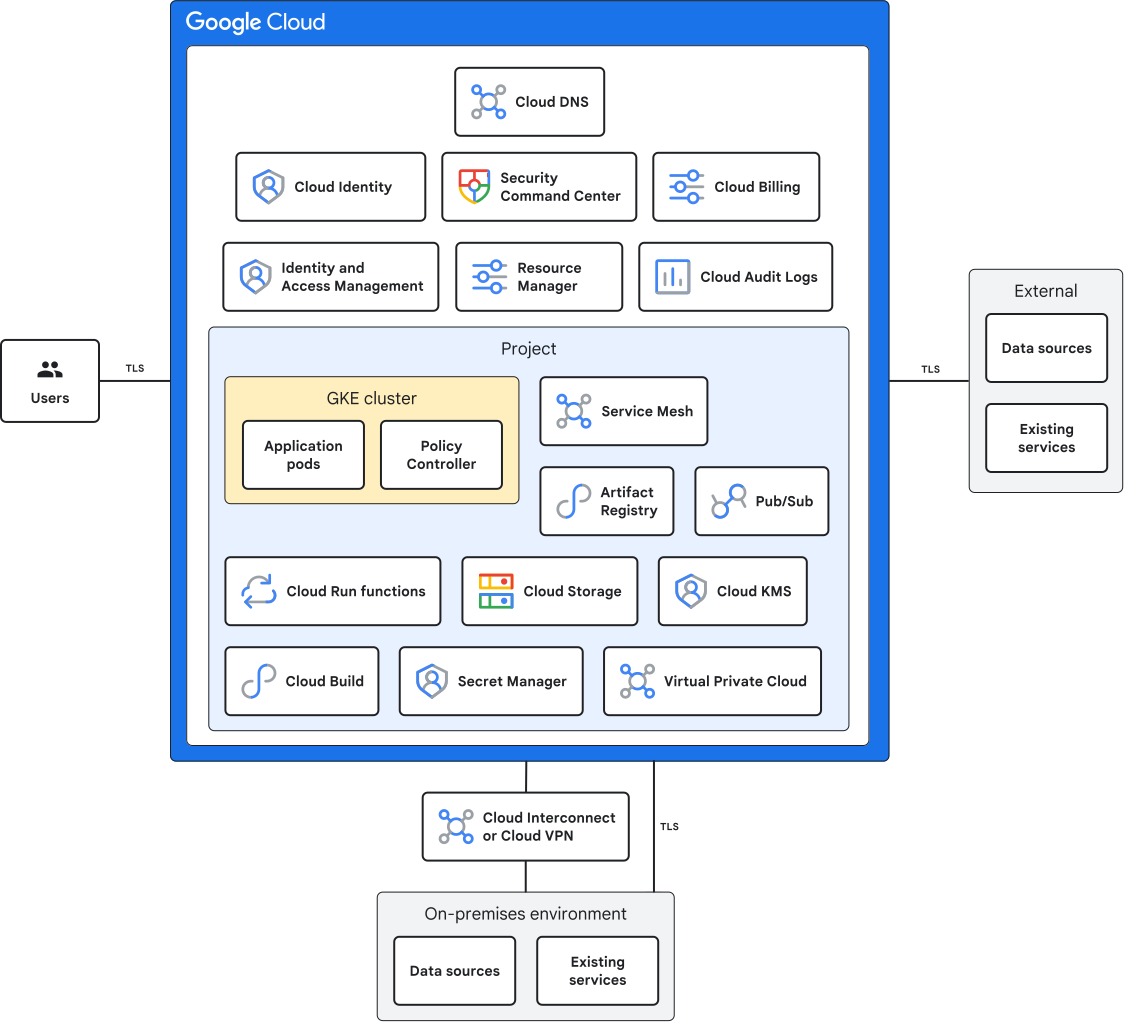
CI/CD, Artifacts & Rollback
A production deployment should be reproducible, traceable, controlled, and reversible. If the release process depends on somebody’s laptop, it is not finished.
Monitoring, SLOs & Incident Signals
The real test of observability is not whether dashboards exist. It is whether the right person can tell that users are hurting, understand why, and start fixing it quickly.
Official Google Cloud Tech video: Observability in action. A useful visual companion to the checks on user-facing health, dashboards, incident signals, and telemetry correlation.
Recovery, Load & Capacity
Failures are not edge cases. They are normal events with different frequencies. Production readiness means deciding in advance which failures you absorb automatically and which require people.
Cost, Runbooks & Operational Ownership
The last five checks are where technical readiness meets operating reality. A system is not ready merely because it can run; somebody has to pay for it, support it, and own the launch decision.
Official Google Cloud Tech video (2026): Before you scale: a guide to Cloud Run cost optimization. It connects max instances, rate limiting, utilization, concurrency, budget protection, and cost controls—the same decisions that matter before go-live.
Turn the checklist into a launch decision
Finish the review with a documented launch decision, named owners for unresolved items, and clear conditions for approval.
The 50 checks in one view
Use this condensed list during the meeting, and refer back to the detailed explanations when a check needs discussion.
Plan How to Detect and Recover From Failures
Things will fail. A dependency will slow down. A node will disappear. A bad release will slip through. A quota will be closer than expected. Somebody will rotate a credential on the wrong day.
The goal of a good readiness review is not to pretend those events can be eliminated. It is to make sure the system—and the team operating it—has a sensible response when they happen.
If your review only asks “Does it work?”, you are checking functionality. Production readiness asks harder questions: How does it fail? How do we know? Who responds? How do we recover? What does it cost? And which risks are we knowingly carrying into launch?
That is a much better conversation to have on Friday afternoon than Monday morning after go-live.
Keep the checklist current
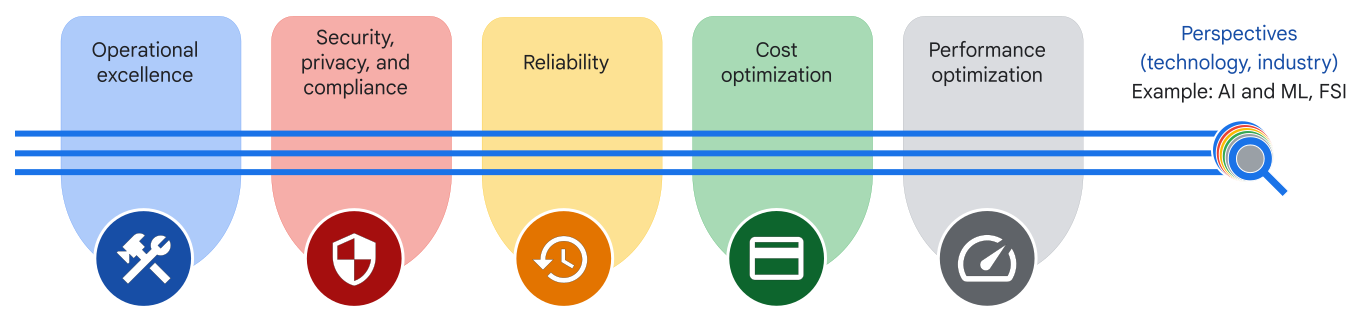
Google Cloud services and best practices evolve. These are the core official references I would keep close when turning this checklist into an organization-specific standard.
- Google Cloud Well-Architected Framework
- Google Cloud recommended security checklist
- GKE cluster security hardening guidance
- Workload Identity Federation for GKE
- Cloud Monitoring SLO monitoring
- Cloud Quotas
- Cloud Billing budgets
- Cost anomaly management
- Secret Manager best practices
- Backup and DR overview